

In Lombok:
- Museum Negeri Nusa Tenggara Barat located in Mataram
- The Museum of Genggelang Village
Online:
- Visit Lombok Heritage Society Facebook Page!
- Visit Chitraleka Bebase Instagram page
- Read the Research of Agus Fathurrahman
Lombok History Project
Lombok is an island in Indonesia’s West Nusa Tenggara province, forming part of the Lesser Sunda Islands chain. Lying just east of Bali and west of Sumbawa, it is separated from its neighbours by the Lombok Strait, which plunges more than 3,600 feet (1,100 metres) and marks the famous Wallace Line—a natural boundary where Asian and Australian species diverge.
At 4,600 square kilometers (1,826 square miles), Lombok is slightly smaller than Bali, though similar in population density. Its shape is roughly circular, with a southwestern peninsula extending into the sea. The island’s landscapes are strikingly diverse: volcanic peaks in the north dominated by Mount Rinjani—Indonesia’s second-highest volcano—give way to fertile central plains, dry savannas in the south, and offshore, many idyllic Gili Islands, renowned worldwide for diving and snorkeling. The island is dotted with ancient temples and mosques, vibrant traditional markets, and communities that maintain unique weaving, pottery, and dance traditions.
Home to around 4 million people, Lombok’s majority population is the Sasak ethnic group, who are predominantly Muslim while also preserving older traditions. The Sasak language has five main dialects, and most people are bilingual, speaking both a Sasak dialect and Indonesia, the national language. Balinese Hindu, Javanese, Arab, Bugis, and Chinese communities add to this cultural tapestry. Modesty and sincerity are highly valued in Sasak society, and visitors are warmly received when they show respect for local customs—such as dressing appropriately outside beach areas, keeping public affection discreet, and consuming alcohol thoughtfully.
In 1970, when Effendi Zarkasih inaugurated the Cakranegara Grand Mosque, he was struck by the sheer number of mosques across the island. He declared it the “Island of a Thousand Mosques”—a title that remains proudly used today. However, the name Lombok itself appears in classical literature, most notably in the Kakawin Nagarakretagama (1365), a Majapahit-era epic poem, where an island called Lombok Mirah is listed among Majapahit’s domains. From this reference emerged the poetic motto “Lombok Mirah Sasak Adi”, which remains part of Sasak tradition. In translation: Lombok means honesty or straightness, Mirah means gemstone or precious, Sasak refers to the people, and Adi means noble or excellent. Together, the phrase proclaims: “Lombok is a precious gem, the Sasak people are noble.”
Since the 1980s, tourism promoters have called Lombok “the next Bali” because it lies just across the Lombok Strait, shares Bali’s beaches, mountains, and culture, and offered an alternative to Bali’s overcrowding. In 2016, as part of a national tourism strategy, the Indonesian government named Mandalika, South Lombok one of its “10 New Balis” priority destinations. The Mandalika Special Economic Zone, a large-scale project on the island’s south coast in Central Lombok, spans more than 1,100 hectares. Backed by the Indonesian government and private investors, it is designed to attract both domestic and international visitors, combining luxury resorts, eco-friendly infrastructure, and major events such as the MotoGP race at the Mandalika International Circuit.
Beyond what is visible today, Lombok’s history tells a deeper story—from the cataclysmic Samalas eruption of 1257, to the rise of Sasak kingdoms, Balinese influence, the spread of Islam, Dutch colonization, and its place in modern Indonesia. This history of resilience and adaptation continues to shape the island’s identity today.
Note:
The history of Lombok has often been passed down orally, and written records are limited or sometimes inconsistent. What we share here is our best effort to piece together what we have learned from various sources. This is not a final or definitive version of Lombok’s history. If you have suggestions, additional sources, or corrections, we warmly invite you to get in touch and contribute to making this account more complete!
Chapter 1: 1257 Samalas Eruption
The volcano known as Mount Samalas once stood where today we see Mount Rinjani and its dramatic crater lake, Segara Anak. In 1257, Samalas erupted so violently that the entire peak collapsed. What was once a towering mountain was replaced by a caldera — a giant crater formed when the ground caves in after a massive eruption. Over time, this caldera filled with water, creating the striking blue Segara Anak Lake, and the Barujari cone — often referred to as the “Child of Rinjani” — rising as a new, still-active volcano.
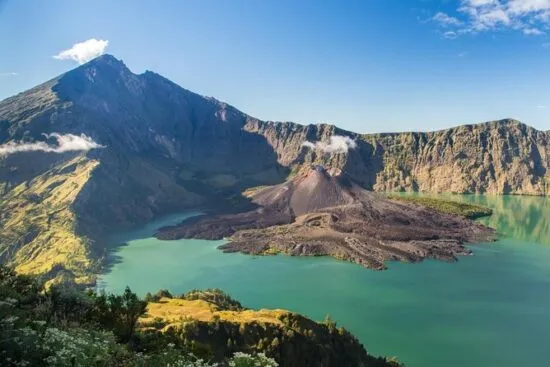
For centuries, the Samalas eruption was remembered only in Lombok’s oral and written traditions, while the wider world remained unaware of its scale. Meanwhile, scientists studying ice cores in Greenland and Antarctica had long identified a mysterious, massive eruption in 1257 CE, but the source volcano was unknown. This “missing volcano” puzzle lasted for decades.
The breakthrough came in 2013, when a French-led research team (Franck Lavigne and colleagues) combined geological surveys, radiocarbon dating, geochemical analysis, and local manuscripts to prove that Mount Samalas was the eruption source. Their findings, published in the Proceedings of the National Academy of Sciences (PNAS), finally solved the mystery. What had once been a global enigma was revealed to be rooted in the mountains of Lombok. The 1257 Samalas eruption thus stands not only as a geological and climatic event of global consequence, but also as a story of rediscovery — where modern science and ancient Sasak traditions came together to illuminate one of the most important natural disasters in human history.
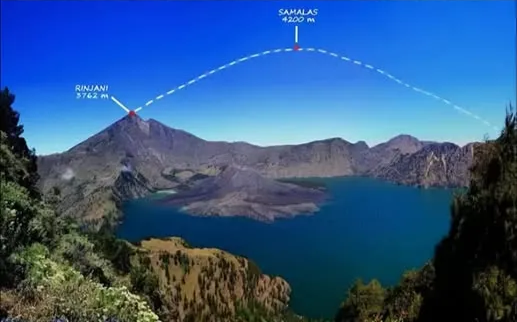
In 1257 CE, Mount Samalas unleashed one of the most powerful volcanic eruptions in recorded history. With a Volcanic Explosivity Index (VEI) of 7, it ranks among the largest eruptions of the last 2,000 years — on par with Tambora (1815) and 8 x greater than Krakatau (1883). The event was apocalyptic for the people of Lombok. Pyroclastic flows buried villages under meters of ash, pumice, and burning gases, wiping out settlements and agriculture across the island and even crossing the strait to devastate parts of Sumbawa. The kingdom’s capital, Pamatan, was destroyed and never rebuilt, disappearing from the historical record much like a Southeast Asian Pompeii.
The Babad Lombok a written collection of Lombok’s oral traditions were likely compiled in the 18th or 19th century—several centuries after the Samalas eruption. It recounts how “ All houses were destroyed and swept away, floating on the sea, and many people died.” Three Lombok manuscripts — the Babad Lombok, Babad Suwung, and Babad Sembalun — preserve collective memories of the catastrophe, describing the destruction of villages, the silence (suwung) that followed, and the resilience of communities in its aftermath.
Scientific evidence confirms the scale of the disaster. At least 40 cubic kilometers of rock and ash were ejected, with eruption columns reaching up to 50 kilometers into the stratosphere. Fine ash and sulfate aerosols circled the globe, blocking sunlight and altering climate. Ice cores from Greenland and Antarctica show a massive sulfate spike in 1257–1258, the strongest of the last millennium. Using carbon-14 (a radioactive form of carbon that can quite accurately determine the ages of events that affect living matter), and no young trees were found after that date, indicating catastrophic conditions at the time. Deposits of ash on Lombok Island reached depths of 35 meters — the height of an eight-story building.
In 1258 the northern hemisphere experienced an unseasonably cold summer, with heavy rains and flooding that resulted in widespread crop failures in Europe. This too is consistent with a huge eruption; dark particles can rise in to the stratosphere and block a fraction of sunlight, dropping temperatures. Across Europe and the Middle East, chronicles describe the “dry fog” of 1258, unseasonal cold, relentless rain, and failed harvests. Famines and epidemics swept across continents, with some historians linking these stresses to the crises of the Little Ice Age and even to the conditions that later fuelled the Black Death.
Although its global impact has been widely discussed, its local impact remains little known, including its societal impact at local and regional scales on Lombok and the neighboring islands of Bali and Sumbawa. Locally, Lombok and Bali may have been depopulated for generations, possibly explaining why King Kertanegara of Singhasari on Java to conquer Bali in 1284 with little resistance. Archaeological evidence suggests recovery took nearly a century.
Chapter 2: Kerajaan of Lombok
According to the Babad Lombok, the island’s oldest known settlement was called Lae or Laeq, which means “a very long ago.” The name itself suggests that Lae may have been more of a legendary “first city” than a real historical place.
Later, a new settlement called Pamatan was built, said to be the capital of an early Lombok kingdom. No one knows exactly where Lae or Pamatan were located, and no clear remains have been found yet. Scientists believe that Pamatan still exists, it lies deep beneath volcanic deposits, waiting to be discovered. The Babad Lombok describes Pamatan as a busy coastal city with farming, fishing, and trade — home to around 10,000 people.
Even after this disaster, the Sasak people survived. The royal family is said to have escaped, and over time new communities grew again. The eruption did not end Sasak civilization — it only changed its direction, leading to the rise of new kingdoms across Lombok.
By the 14th and 15th centuries, new Sasak kingdoms appeared. Instead of one united ruler, Lombok was divided into many small kingdoms led by local kings or datu. The most famous were Pejanggik and Selaparang, but there were also others like Langko, Bayan, Sokong Samarkaton, and Kuripan. These kingdoms often competed with one another, sometimes forming alliances, and sometimes fighting wars. They were also influenced by bigger powers from outside, such as Majapahit from Java, later Islamic kingdoms, and eventually the Balinese.
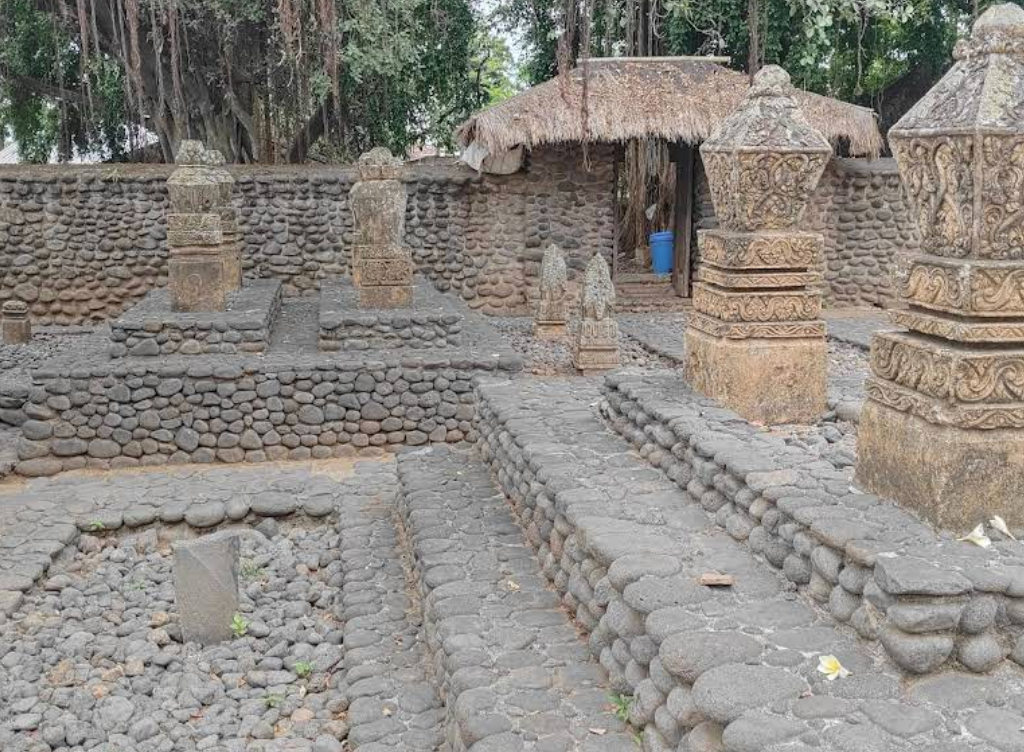
Kingdom of Pejanggik
The Pejanggik Kingdom was centered in what is now Praya, Central Lombok. It grew after the Samalas eruption and became one of the earliest strong Sasak kingdoms.
Its rulers, called Datu Pejanggik, governed based on Sasak traditions — with nobles, adat (customary) leaders, and farming communities. At first, the people followed the old Sasak belief system known as Boda. Later, they were influenced by Hindu-Javanese culture from Majapahit, and eventually by Islam.
Pejanggik controlled much of southern and central Lombok. But over time, it lost power to its eastern rival, Selaparang. When Islam spread and Selaparang became stronger, Pejanggik’s influence faded. In the 17th century, Pejanggik was also drawn into wars with the Balinese kingdom of Karangasem, which later ruled the whole island.
Kingdom of Selaparang
The Selaparang Kingdom, based in East Lombok, became the most powerful Sasak kingdom.
Historians often describe two periods:
- Hindu Selaparang (14th–15th century), shaped by Majapahit’s culture and influence.
- Islamic Selaparang (16th century onward), after Islam spread through teachers from Java and Makassar.
The rulers of Selaparang, known as Raden, built a strong Islamic kingdom that united many smaller Sasak states. Even though Islam became the main religion, Sasak customs and older Hindu-Javanese traditions continued to blend together.
At its peak, Selaparang ruled most of Lombok and was recognized as the main center of Sasak culture and politics. But in 1672, the Balinese Karangasem kingdom invaded and defeated Selaparang, beginning a long period of Balinese rule that lasted until the 19th century.
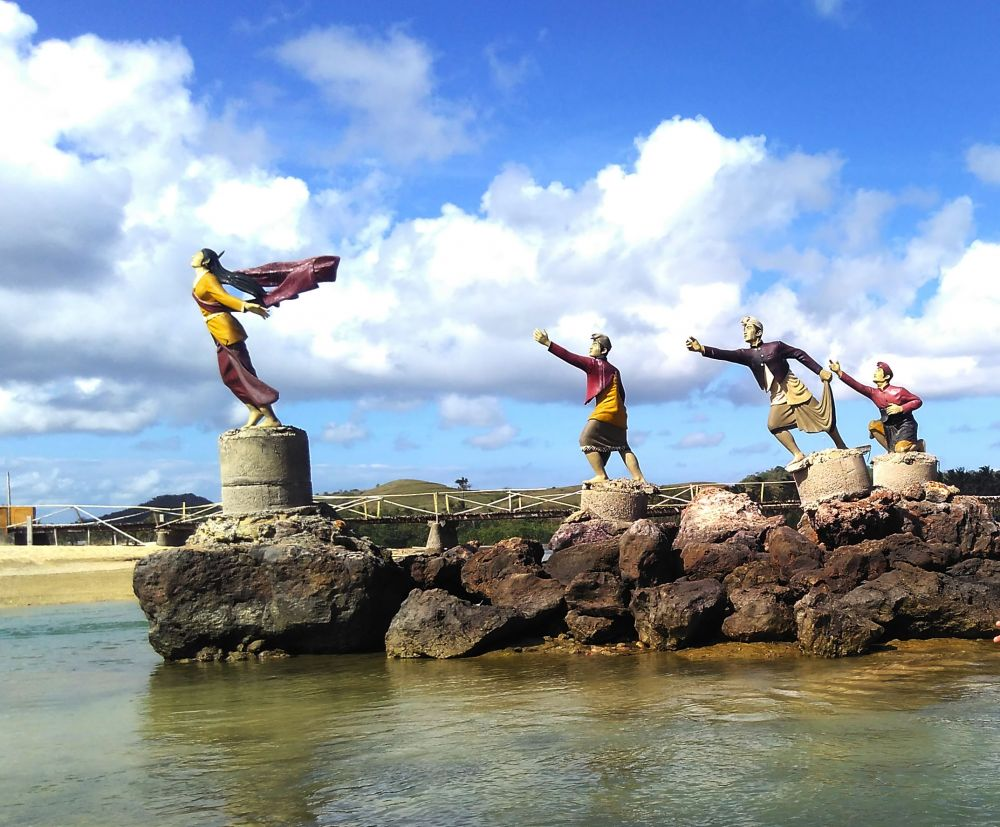
Princess Mandalika
Princess Mandalika is one of Lombok’s most famous legends orginating from this period. Her story sits between myth and history.
The legend says she was the daughter of a Sasak ruler during the time when kingdoms like Pejanggik and Selaparang were rising. Many princes wanted to marry her, and their competition threatened to cause war. To save her people, Mandalika chose to sacrifice herself by jumping into the sea at Seger Beach near Kuta.
She is said to have transformed into nyale, colorful sea worms that appear once a year during the Bau Nyale Festival. The festival celebrates her spirit of peace and selflessness — a story still deeply alive in Sasak culture today. Her name is also remembered in the modern Mandalika tourism area, linking legend to the island’s present day.
Majapahit Influence (1293–1527)
When Lombok began to recover in the 14th century, the Majapahit Empire in East Java was expanding across Indonesia. A Majapahit poem from 1365, the Nagarakretagama, even mentions Lombok Mirah and Sasak Adi as part of its territories.
Majapahit likely didn’t rule Lombok directly, but its culture and politics had a strong influence. Local Sasak rulers probably paid tribute to Majapahit in exchange for trade and protection. Hindu-Buddhist ideas, art, and administrative systems from Java began shaping Lombok’s kingdoms during this time.
When Majapahit declined in the late 15th century, Lombok’s kingdoms became independent again — ready for the next major change: the arrival of Islam.
The Coming of Islam (15th–16th Centuries)
After Majapahit fell, a new power rose in Java — the Demak Sultanate (1475–1548), the first Islamic kingdom in the region. Founded by Raden Patah, who was believed to be a descendant of the Majapahit royal family, Demak helped spread Islam across the islands, including to Lombok.
Islam reached Lombok through trade and travel. Muslim merchants from Gujarat, Arabia, and Sumatra visited the island, and Islamic teachers — some connected to the famous Wali Songo of Java — taught in local communities.
The rulers of Selaparang were among the first on Lombok to accept Islam, and when the royal family converted, the people followed. Islam mixed with older beliefs, creating a local form known as Wetu Telu, which blended Islamic teachings with older Sasak customs. Over time, more orthodox Islamic practices, called Waktu Lima, also spread.
This period marked a major turning point in Lombok’s history — connecting the island more closely to the wider world of the Indonesian archipelago.
Chapter 3: Era of Balinese Rule (17th–18th Century)
If you want to understand the history of Lombok, you must begin in Bali. And if you wish to understand Bali’s modern story, you must begin in Lombok. For centuries, the two islands have reflected one another — politically, spiritually, and culturally. Their histories are intertwined like the waters of the Lombok Strait that separate them. The Sasak people of Lombok, the island’s majority, long played crucial roles in the life of the Balinese courts.
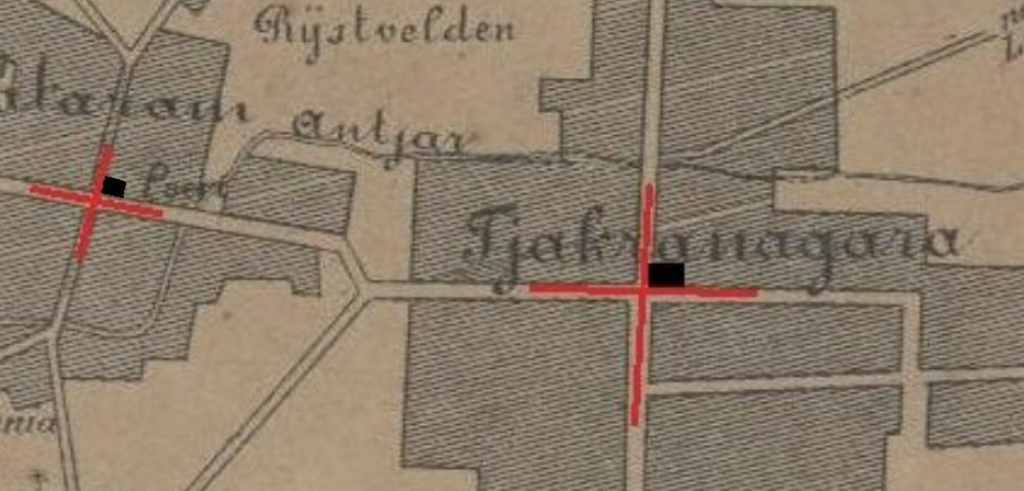
Karangasem
By the early 1600s, Balinese power was already reaching across the strait. From their stronghold in East Bali, the Karangasem kingdom began asserting influence over Lombok’s western coast. By the end of that century, much of West Lombok was under Balinese control. Around 1740, four principalities emerged — Mataram, Singasari-Karangasem, Pagasangan, and Pagutan — each ruled by Balinese nobles, yet entangled in complex alliances and rivalries with Sasak leaders.
The coastal town of Ampenan became a key port under I Gusti Wayan Taga in 1741, serving as Mataram’s main harbor. The rival kingdom of Singasari (in what is now Cakranegara) preferred Tanjung Karang. For over a century, the two courts competed not only for territory but for spiritual legitimacy — each claiming to be the rightful heir of Karangasem’s authority on Lombok.
International Port of Ampenan
Mads Lange (1807–1856), a Danish trader and diplomat, and George King, an English merchant, were among the wealthy foreign merchants operating from the ports in Lombok. Lange had settled in Tanjung Karang, near Ampenan, serving as a subandar — a licensed port agent — linking Lombok’s rice, cattle, and tobacco with the markets of Singapore, China, and beyond. His trading house stood at the edge of a world in transition, when European merchants still worked through diplomacy rather than conquest.
Lange sided with Singasari, while his business rival George King supported Mataram. When Singasari fell in 1838, Lange was forced to abandon his post at Tanjung Karang. He fled across the strait to Kuta, Bali, where he established what would become Mads Lange’s Trade Complex — a bustling center of commerce, negotiation, and diplomacy. Through their ventures, Lange and King helped weave Lombok into the wider regional economy of the 19th century bringing prosperity to Lombok from world beyond. In this way, they stand as symbols of the early contact period, when island kingdoms engaged the global world not through war or colonization, but through commerce, and alliance.
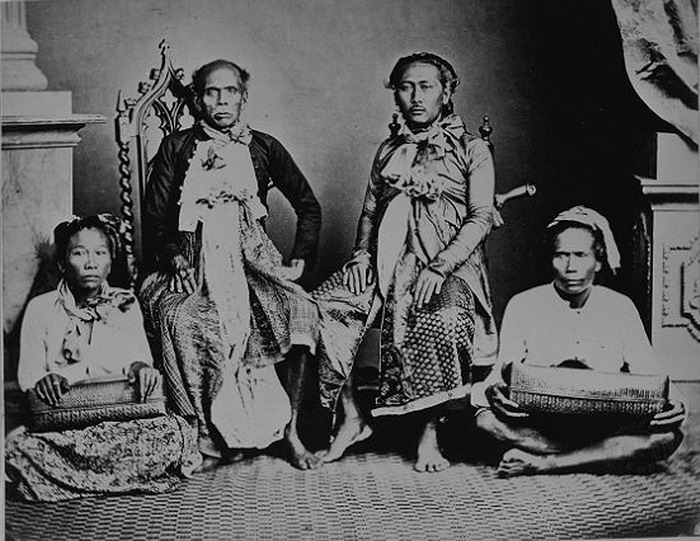
The Civil War and the first Puputan (1838)
By the early 19th century, Lombok was divided between two Balinese royal houses — both branches of the powerful Karangasem dynasty from East Bali. To the west stood Mataram, ruled by Anak Agung Gusti Ketut Karangasem; to the east, Singasari (Cakranegara), ruled by I Gusti Ngurah Made Karangasem. Each claimed descent from the same Balinese lineage and each considered itself the rightful heir to Karangasem’s authority on Lombok. Their rivalry deepened through alliances, trade, and marriage — until it erupted into all-out war.
Hugh Gordon, an English adventurer who visited Mataram around the same time, recorded in his diary the grand pelebon (cremation ceremony) of Gusti Ketut Karangasem, the King of Mataram, who had been killed in battle at Rumak during the civil war. Gordon’s account is among the earliest foreign records of Lombok’s royal life. He described how the King’s body was laid upon a towering pyre, while all seven of his wives and attendants leapt alive into the flames — their bodies consumed in a final act of loyalty and devotion. He noted how the cremation turned into a public spectacle: the royal orchestra played, priests chanted mantras, and courtiers wept and cheered as the flames rose into the night.
The war reached its tragic climax in July 1838, when the forces of Mataram surrounded Sweta, the stronghold of I Gusti Ngurah Made Karangasem, the King of Singasari. Facing certain defeat, the King and about three hundred followers chose ritual death rather than submission.
This was the first recorded puputan — a mass act of sacrifice. Some have disputed this as the first puputan claiming it must have occurred in Bali first, despite historical records confirming Lombok. The chronicles and European witnesses agree: the tradition of puputan — heroic death as ultimate devotion — was born on Lombok’s soil.
These twin deaths — the puputan of I Gusti Ngurah Made Karangasem and the pelebon of Gusti Ketut Karangasem — marked the violent end of Lombok’s divided kingdoms. From the ashes of civil war rose a single, united Lombok
In the war’s aftermath, the Mataram line reasserted dominance, unifying the island under a single Balinese crown by about 1839. Mataram emerged as the political and spiritual heart of Lombok — a city of palaces, temples, and gardens that would later astonish travellers with its order and elegance.
The Mataram dynasty
In 1839, after a period of strife between rival Balinese descent-groups, Lombok was united under the Mataram dynasty. Thus began a long period of political stability for the island, a period in which Lombok developed into the most orderly, the richest and certainly the most powerful independent state of the nineteenth century Eastern archipelago.
By mid-century, Mataram Lombok had become one of the richest and most orderly kingdoms in the eastern archipelago. It was a state deeply engaged with the world — exporting rice and tobacco, encouraging irrigation, and expanding its cultivated lands. The population swelled from around 300,000 in 1839 to over 550,000 by 1894 — a sign of both economic growth and effective governance.
Trade connected Lombok to the Malay world and beyond. Ampenan’s harbor bustled with ships flying British, Danish, Arab, and Chinese flags. Through these networks, Lombok’s produce — rice, cattle, tobacco, gold — reached markets as far as Singapore and China. In return came weapons, textiles, and new ideas. Mataram’s rulers embraced these exchanges while carefully preserving their sovereignty.
Visitors in the 19th century often marveled at Lombok’s capital. Some called Mataram “the Paris of the East” — a city of straight avenues, royal gardens, and elegant compounds stretching toward the sea.
Each royal compound, or puri, was more than a palace. It was a fortress, the seat of governance— the puri itself was the administrative, cultural, and spiritual heart of the kingdom. The puri embodied the universe in miniature — the king’s residence at its heart symbolizing harmony between the divine and the earthly. Laid out in a perfect grid based on Hindu-Balinese cosmology, it revolved around sacred crossroads known as Catus Patha — the meeting of four directions representing the cosmic balance of the universe.
Both Puri Mataram and Puri Cakranegara stood as masterpieces of this sacred geometry until 1894, when Dutch cannons reduced them to ruins – once centers of culture and learning — today, are almost forgotten.
The Reign of the Wise King: I Gusti Gde Ngurah Karangasem (1872–1894)
In 1872, I Gusti Gde Ngurah Karangasem ascended the throne, already an experienced statesman. His reign marked the golden age of Lombok’s kingdom — a time of prosperity, tolerance, and international prestige.
He ruled not as an isolationist monarch but as a cosmopolitan leader. His court at Mataram welcomed scholars and merchants from across the world: Danes, Russians, Arabs, Englishmen, Chinese, Malays, Bugis, Ambonese, and Sasaks. Ampenan thrived as a cosmopolitan port. Currencies circulating in Ampenan at the time included Dutch guilders, Spanish dollars, Japanese and Chinese kepeng, and other foreign coins—evidence of its flourishing international trade.
The Raja’s most remarkable legacy, however, was his inclusive governance. Married to a Sasak princess, Dende Aminah (Nawangsasih), a devout Muslim, he built a mosque beside Pura Miru for her prayers and invited Islamic scholars like Guru Baok to teach at the palace. Another Sasak wife, Dende Fatimah, was likewise free to practice Islam. His Arab advisor, Sayid Abdullah, became both spiritual counselor and chief of Ampenan’s port. Even his grandson, Imam Sumantri (Datu Pangeran), was Muslim, a symbol of the kingdom’s harmony.
Under his rule, Mataram became a pluralist city, where Hindus and Muslims lived and worshipped side by side. This legacy of tolerance endured for generations — remembered even in the 20th century as a defining spirit of Lombok.
Lombok’s Consulate in Jeddah
Around 1874, the Raja took an extraordinary step: he established a Lombok Consulate in Jeddah, then part of the Ottoman Empire. This act reflected the king’s deep commitment to Lombok’s Sasak and Muslim communities. The purpose was to assist Sasak pilgrims performing the Hajj in Mecca — a journey that Lombok’s Muslims had been doing since the 17th century.
By opening this consulate — just two blocks from the Dutch East Indies office — the King also declared Lombok’s sovereignty to the world. Only independent states were allowed to establish diplomatic representation. This move infuriated the Dutch, who saw it as an act of defiance. Yet for Lombok, it was a statement of dignity — a small island kingdom claiming its place among nations.
The Fall of the Kingdom (1894)
Sensing opportunity, the Dutch East Indies launched an invasion in 1894, claiming to protect the Sasak against Balinese oppression. The war that followed was the bloodiest in Lombok’s history.
The kingdom fought fiercely. Its army was among the most modern in the archipelago, with imported rifles, artillery, and two warships — the Sri Mataram and the Sri Cakra — acquired through the Russian adventurer W.P. Malygin, once the King’s military adviser and arms broker. Malygin had smuggled weapons from Singapore and even commanded operations to bypass Dutch blockades.
But superior firepower and betrayal from within sealed Lombok’s fate. The Dutch bombarded Puri Cakranegara and Puri Mataram, massacring defenders and looting the royal treasury — one of the largest hauls in Dutch colonial history. The wise King was killed; the dynasty fell.
With that, a brilliant chapter closed. Lombok, once a sovereign island of trade, tolerance, and power, entered the long shadow of colonial rule. Its palaces in ruins, its treasures scattered, and its history nearly erased . Yet in present day Mataram the memory of this Balinese-Sasak kingdom still breathes, whispering of an era when Lombok was both bridge and kingdom.
Legacy – Lombok district in Utrecht
In the late 19th century, religious life in Lombok was known for its harmony. People of different faiths lived side by side in mutual respect, freely practicing their beliefs. The King of Lombok was celebrated as a pioneer of tolerance and pluralism — values that deeply impressed many Dutch officials during the colonial era. This admiration may have inspired the Dutch government to name a new multicultural neighborhood in Utrecht after the island: Lombok.
The Lombok district was first established in 1886 as a workers’ quarter. Over time, immigrants from Italy, Turkey, Morocco, Iran, and other parts of the world came to the Netherlands in search of work and made Lombok their home. Today, the district remains a true melting pot — a living example of coexistence among diverse cultures.
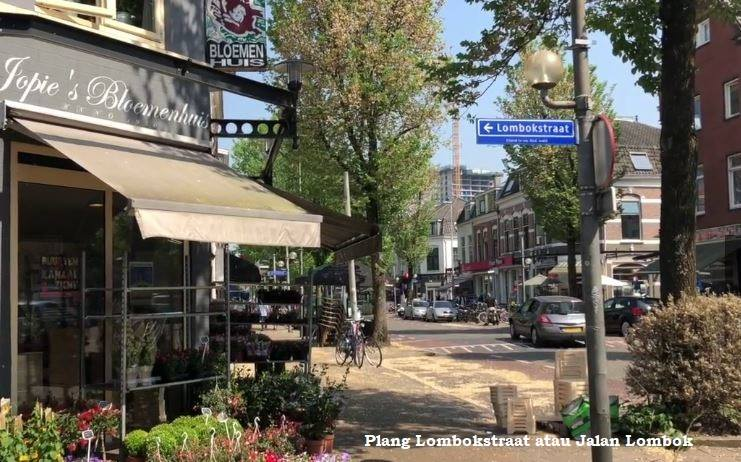
Reflecting its namesake, the neighborhood is divided into West Lombok and East Lombok, separated by JP Coenstraat. The main street, Kanaalstraat, runs for about one kilometer from the Ulu Mosque to the Catholic Church, symbolically linking faiths and communities along its path. Many of the surrounding streets are named after islands, cities, and colonial figures from the former Dutch East Indies — such as Semarang, Java, Bangka, Borneo, Jan Pieter Coen, Daendels, and Van den Bosch.
Through time, the Netherlands has managed to preserve Lombok in Utrecht as a multicultural and tolerant district — a modern reflection of the spirit once found in the island of Lombok itself.
Chapter 4: The War (July - November 1894)
By the late 19th century, Lombok had emerged as one of the most formidable pre-colonial states in the Indonesian archipelago. The island was ruled from Mataram by the Balinese Karangasem dynasty, whose authority extended over the indigenous Sasak population. Under Raja Anak Agung Gede Ngurah Karangasem, Lombok became both wealthy and militarily advanced, its rulers trading rice, sandalwood, and coffee through Ampenan Port and even acquiring two British-crewed steamships from Singapore — a move that alarmed the Dutch, who viewed the Balinese regime as a threat to their colonial monopoly.
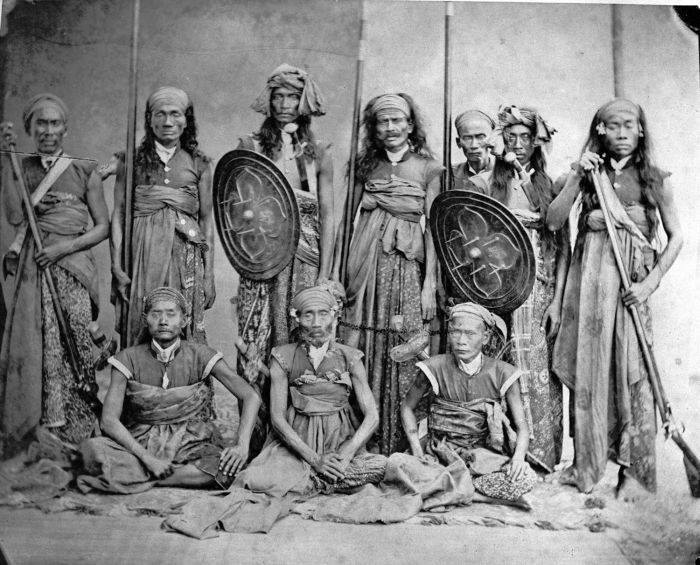
The Dutch Ultimatum
In July 1894, Dutch warships entered the waters off Ampenan. An ultimatum was sent to the Raja: he must abdicate in favor of the crown prince, Anak Agung Ketut Karangasem, and banish the unpopular prince, Anak Agung Made Karangasem. When the Raja resisted, Dutch forces began their invasion.
At dawn on July 6, the Dutch landed unopposed at Ampenan Beach. Their troops, led by Major General Petrus Paulus Hermanus van Ham, lowered the Lombok flag — red–white–blue–white–red — from its pole.
At first, there was calm. The Dutch believed the Balinese would yield. But behind the scenes, Anak Agung Ketut Karangasem was quietly rallying his nobles and preparing a surprise counterattack.
The Night of Fire
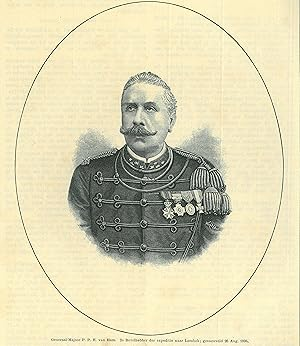
On the night of 25–26 August 1894, Balinese forces struck without warning. Thousands of warriors stormed the Dutch camp at Cakranegara, cutting down soldiers in their tents. General Van Ham was killed in the fighting. The Dutch suffered devastating losses; hundreds were dead, their expedition in disarray. Across Lombok and Bali, the news was celebrated as a rare triumph against European might.
But victory was short-lived. In Batavia, outrage was swift. The Dutch were furious over the death of General Van Ham and demanded only complete submission or annihilation. The Netherlands dispatched massive reinforcements under General Vetter, with orders for total conquest. Heavy artillery, warships, and thousands of fresh troops sailed for Lombok.
The Second Invasion
By September, Dutch cannons began bombarding Mataram and Cakranegara, the twin seats of Balinese power. The royal compounds—fortified puri surrounded by high walls—became infernos. On 29 September 1894, Crown Prince Anak Agung Ketut Karangasem led a puputan, a ritual mass-suicide battle, choosing death before capture.
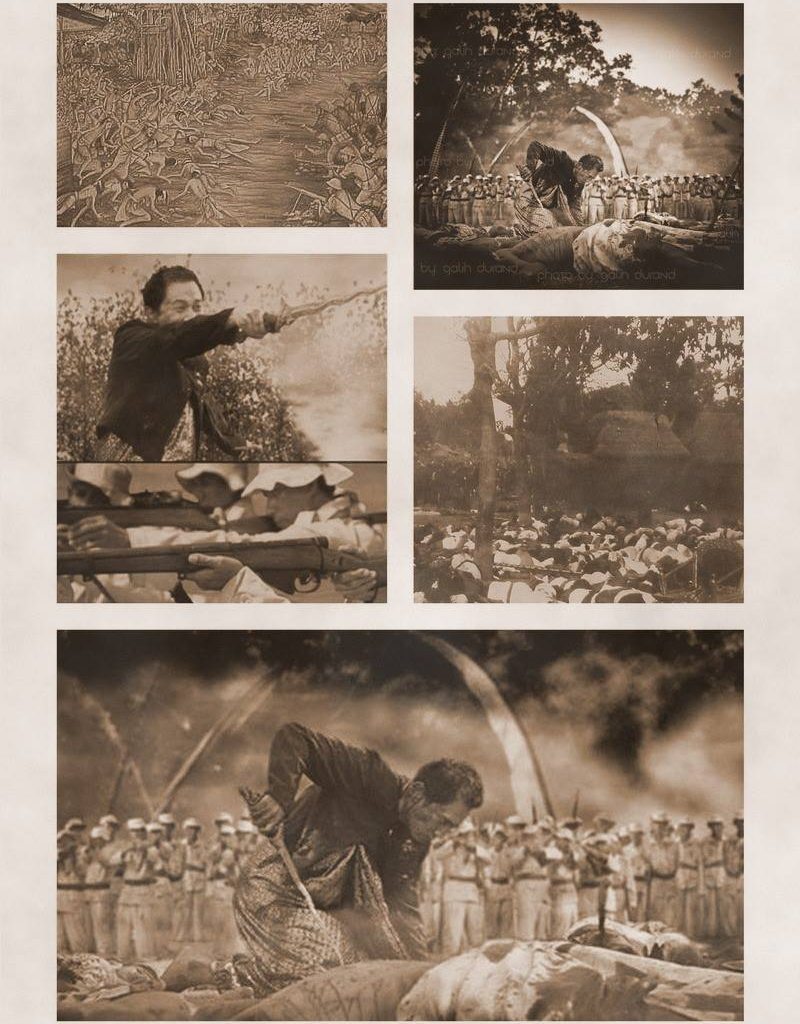
In the months that followed, the war descended into tragedy. Three puputan were recorded— at Mataram, Sasari, and Tohpati — each a ritualized act of collective death, where nobles and followers, dressed in white and perfumed with sandalwood, charged forward to meet their end. Entire royal families, including women and children, perished in flames or fell upon Dutch bayonets rather than surrender.
The Fall of Mataram
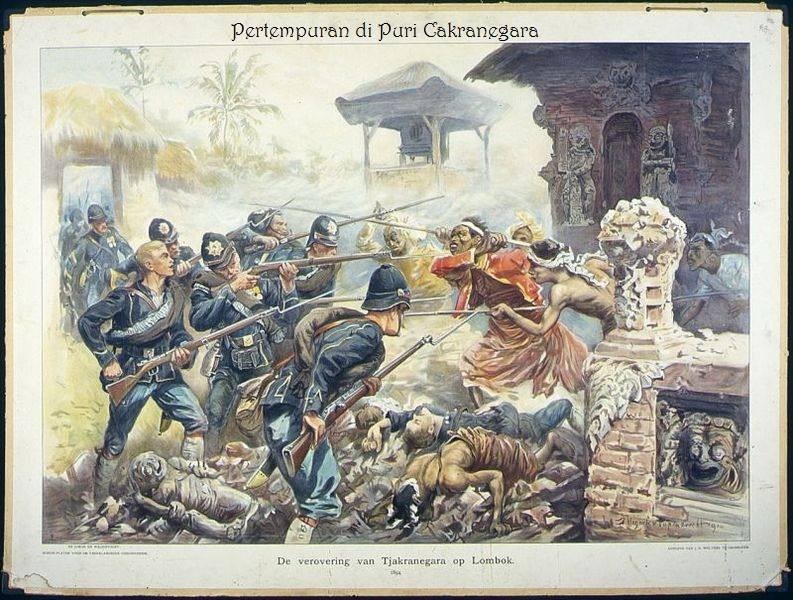
On 13 November 1894, new Dutch reinforcements — over 2,000 troops — landed, signalling the final stage of the campaign. By 18 November, they surrounded Cakranegara on all sides.
At 3 a.m., the Dutch began their assault. Fighting raged house to house. Women and nobles fought side by side, armed only with spears and bamboo. The puri’s design — sixteen walled compounds — made every courtyard a killing ground.
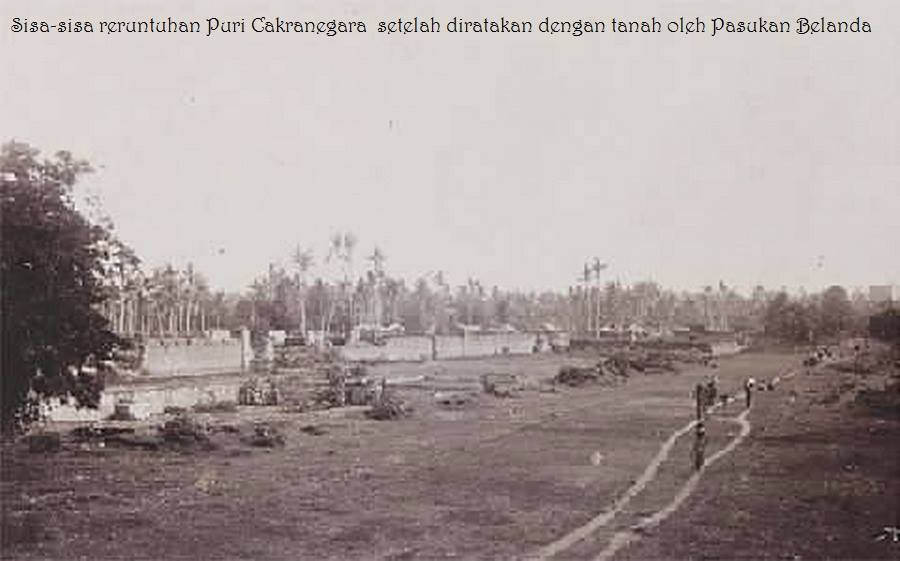
By afternoon, the Dutch had seized the outer courts but failed to take the central residence, where the king’s defenders made their last stand. Exhausted and starving, the Dutch withdrew at dusk, unaware that within days, the dynasty would collapse.
19th of November 1894: There had been some disturbance inside the royal compound the previous night, but intelligence soon confirmed the cause: the injured Raja of Mataram, together with members of the royal family, loyal retainers, and a small band of punggawa (nobles), had fled northward to Sasari (Seksari) under cover of darkness.
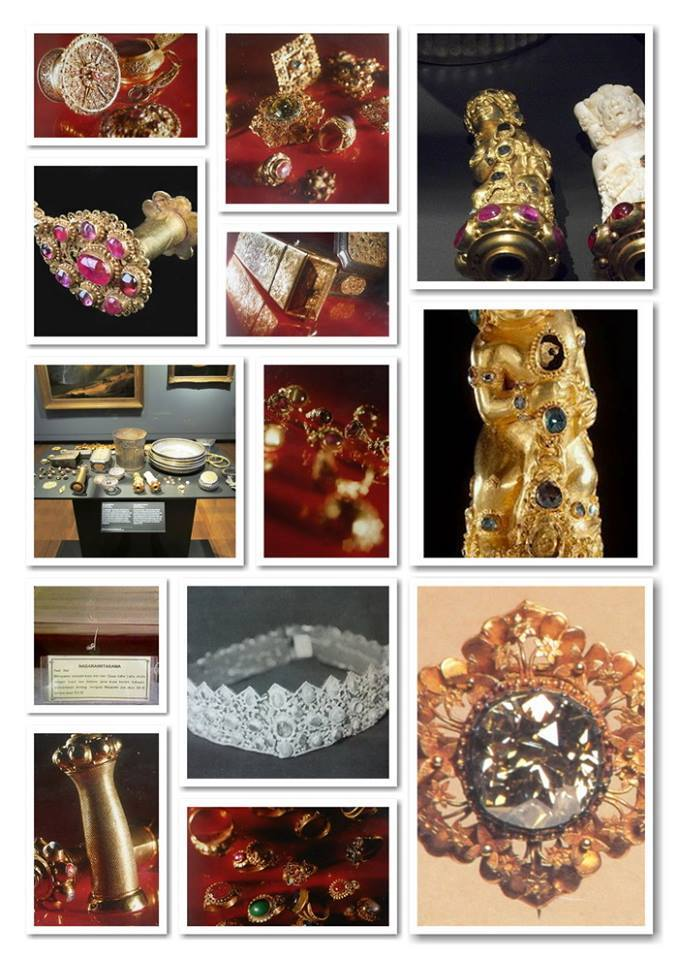
With the royal palace — the Puri Cakranegara — abandoned, chaos erupted. Soldiers, porters, and opportunists alike stormed the compound in a frenzy of looting. They discovered the king’s treasure house, a chamber roughly 16 feet square, packed to the ceiling with stacks of Rijksdaalders — silver coins two feet high — as well as gold ornaments, gemstones, and ceremonial regalia. The Dutch forces quickly seized the spoils: in the days that followed, 250 kilograms of gold and 3,810 kilograms of silver were sent to Batavia, followed by an additional 3,389 kilograms of silver and jewels.
Among the plundered items were manuscripts from the Puri library, including a copy of the Nagarakretagama and other works by revered Javanese poets. Within a month, in the army camps of Java, soldiers were reportedly selling off gemstones and royal ornaments piecemeal — souvenirs from the fall of Lombok.
Once the treasury had been stripped, Generals Vetter and Segov ordered the systematic destruction of the palace. The 6th Battalion demolished the remaining perimeter walls, while two companies of the 11th leveled the temples along the southern approach. Captain Tuinenburg oversaw the disposal of the palace’s gunpowder and ammunition stores, dumping them into the Mayura pond. By mid-afternoon, Puri Cakranegara was reduced to ruins.
The Lombok Treasure
The End of the Karangasem Dynasty
On 20 November 1894, Dutch troops surrounded Sasari, where Raja Anak Agung Gede Ngurah Karangasem had taken refuge. At noon, after a long siege, the Raja surrendered. Dressed in yellow and shaded by a golden parasol — the last emblem of his royal dignity — he was carried away by Dutch porters past the smoking ruins of his capital.
At dawn on 23 November, the Raja was awakened by Controller Liefrinck, who delivered the written order: the Commander-in-Chief had decided to send him into exile in Batavia. In the dim morning light, he was hastily escorted to the shore. The soldiers still slept in their barracks; there were no honors, no farewells. His departure was kept secret to prevent protest.. Accompanied by his child, grandchild, and nephew, he was taken aboard the warship Prins Hendrik. He would never return.
Three days later, on 26 November 1894, Lombok’s royal line met its final act. Anak Agung Nengah Karang, crippled but unbroken, was carried on a litter to the battlefield at Tohpati. Surrounded by his family and loyal followers, he led them in a final puputan — the ritual death that marked both defiance and surrender to destiny.
With his fall, the War of Lombok reached its tragic end. The Karangasem dynasty was extinguished. The Dutch flag rose over Cakranegara, and Lombok fell under colonial rule.
Dutch forces stormed the palaces of Mataram and Cakranegara, they found stores of wealth almost without parallel in Southeast Asia. In the royal storerooms of Mataram lay about 1,000 pounds of gold and nearly 7,000 pounds of silver — an unimaginable fortune in the 19th century. But the greatest astonishment came in Cakranegara, where soldiers entered a chamber roughly five by five meters, stacked to a height of two meters with silver coins. On top of the silver were placed golden and silver krises, ceremonial vessels, and jewels — heirlooms of a kingdom that had once bridged Balinese grandeur and Sasak devotion.
In addition to the physical treasure, the Dutch imposed a punitive war indemnity of 450,000 florins, in modern terms, the total value would equate to roughly USD $4.8–7.1 million on the conquered kingdom. Combined with the looted gold and silver, this made the Lombok expedition not merely self-financing but enormously profitable.
Among the spoils was something even more precious than gold: the royal manuscript library. After the final battle, Dutch troops seized what became known as the Lombok Treasure . These manuscripts, written in Old Javanese, Balinese, and Sasak, formed one of the most important literary archives in Indonesia.
In 1906, the Netherlands Indies government donated the collection to Leiden University Library. The Lombok Collection at Leiden comprises over 450 shelf items in the library’s Oriental section. It includes a breathtaking variety of works — epic poems, religious treatises, chronicles, magical formulas, legal codes, letters, business contracts, and everyday notes. Many date from the 19th century, yet some are far older. Among the oldest are texts such as the Buddhist treatise Sang Hyang Kamahāyānikan (Or. 5068, Or. 5083, Or. 5129), and the rare Old Javanese epics Pārthayajña (Or. 5024) and Kṛṣṇāyaṇa (Or. 5040).
Remarkably, the collection also preserves the voices of ordinary people. Among the palm leaves are a list of books from a deceased priest’s estate (Or. 5302), a home remedy for male impotence (Or. 5409), invoices for ceremonial expenses (Or. 5239), and a thank-you note attached to a gift of four baskets of limes (Or. 5298). These fragments bring to life a world that was literate, hierarchical, and deeply human — revealing how writing and ritual shaped daily life in 19th-century Lombok.
Modern research leaves no doubt that the Lombok Treasure was taken without consent and under coercion. The trove included not only manuscripts and precious metals but also adorned weapons, jewelry, textiles, and ritual objects — each one part of Lombok’s cultural and spiritual heritage. Together, these items represent both a material and moral loss: a civilization’s accumulated knowledge and artistry uprooted in a single act of conquest.
Chapter 5: Colonial Rule (1894-1942)
The Dutch conquest of Lombok in 1894 marked the end of the island’s royal era and the beginning of colonial rule. Both Puri Mataram and Puri Cakranegara, the twin centers of Balinese power on the island, were reduced to ruins. After the war, the Dutch established Mataram as their new administrative capital, favoring its terrain and central position over the grandeur of Cakranegara. From here, Lombok was absorbed into the Netherlands East Indies, becoming an outpost of empire rather than a center of power. What had once been one of the most formidable pre-colonial states in the archipelago was, within a generation, reduced to a quiet, peripheral territory.
Dutch rule in Lombok was direct but shallow, lasting less than fifty years — from 1894 until the Japanese invasion in 1942. Unlike in Java, where colonial influence reshaped society and cityscapes, the Dutch presence in Lombok was limited. They governed largely through Sasak aristocrats who had sided with them against the Balinese, and they relied on taxation, forced labor, and cash-crop production to sustain their administration.
The historian Dr. van der Kraan observed that the Sasak peasants were the greatest historical losers: “Conquered by the Balinese, betrayed by their own aristocrats, and once again conquered by the Dutch, they remained the victims of ongoing oppression and exploitation.”
The Dutch introduced coffee, cotton, indigo, and tobacco cultivation, reorganizing land for export while rice farmers fell deeper into poverty. They imposed heerendiensten (forced labor) for road building and estate work, and demanded heavy taxes. Only the local elite had access to education through Dutch-language schools, producing a small class of colonial administrators but leaving most Sasak villagers untouched by formal learning.
In Ampenan, the Dutch developed a port to support regional trade. Mataram grew into the colonial administrative hub, with buildings such as Gedung Pola, Gedung GMI, Hotel Bogor, and the Kebun Radja Monument. Most of these colonial structures have since vanished under waves of modern development. Only a few remnants survive in Ampenan — faded but tangible traces of that brief colonial era.
The Dutch also dreamed of greater infrastructure. In 1896, engineers surveyed Lombok for a railway line linking Ampenan, Mataram, Cakranegara, and Kediri. The project was ambitious — meant to transport rice and goods efficiently — but it failed after unrest in Central Lombok and the deaths of Dutch officers and surveyors. Later attempts in 1904, 1907, and 1914 revived the idea, including plans to link a new port at Lembar, but all collapsed amid financial and political instability. World War I ended the dream entirely.
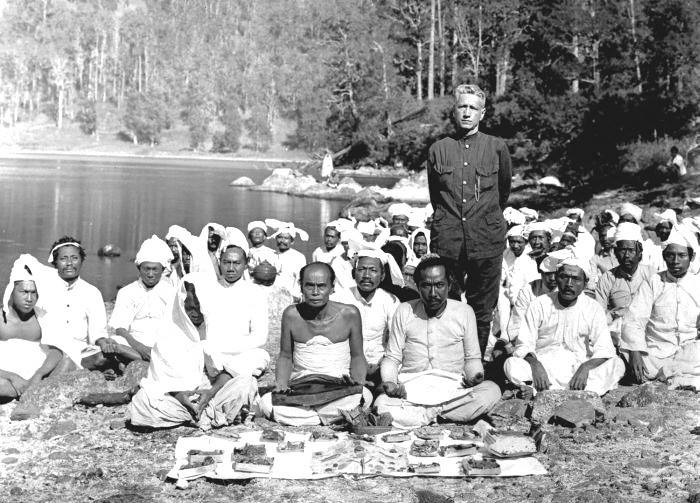
The Dutch allowed Lombok’s Hindu and Muslim communities to continue their religious practices, though they kept tight control over political activity. The ancient Mulang Pekelem ceremony at Lake Segara Anak, once banned by the Dutch, was eventually reinstated after droughts led colonial officials to respect its spiritual power.
Under the Dutch, Lombok remained a marginal province — valuable for its rice and port but secondary to Bali and Java. Infrastructure improved modestly, but the island’s autonomy and prosperity vanished. By the late 1930s, Lombok had become a quiet backwater of the Netherlands East Indies, its royal lineage broken, its treasures dispersed, and its people under foreign administration. When the Japanese arrived in 1942, Dutch rule collapsed overnight, closing the colonial chapter.
Chapter 6: The National Period (1945–Present)
After World War II and Indonesia’s proclamation of independence in 1945, Lombok became part of the newly founded Republic of Indonesia. However, the path to integration was not straightforward.
Following Japan’s surrender, the Dutch attempted to regain control over the archipelago. To maintain influence in eastern Indonesia, they proposed a federal system known as the United States of Indonesia, where eastern regions — including Lombok and the rest of the Lesser Sunda Islands — would remain semi-autonomous under Dutch oversight rather than joining the Republic centered in Java.
Within this framework, Lombok was placed under the State of East Indonesia (Negara Indonesia Timur, NIT), established in 1946 with Dutch support. Officially, this meant that Lombok was not yet part of the independent Republic proclaimed by Sukarno and Hatta in Jakarta.
Yet, Republican nationalism spread rapidly across the island. Sasak leaders, students, and religious organizations voiced strong support for the independence movement and the vision of a united Indonesia. By 1950, under growing political pressure and popular demand, the State of East Indonesia was dissolved, and Lombok was fully integrated into the Unitary Republic of Indonesia. The island continued to evolve politically, socially, and economically as part of the broader Indonesian state.
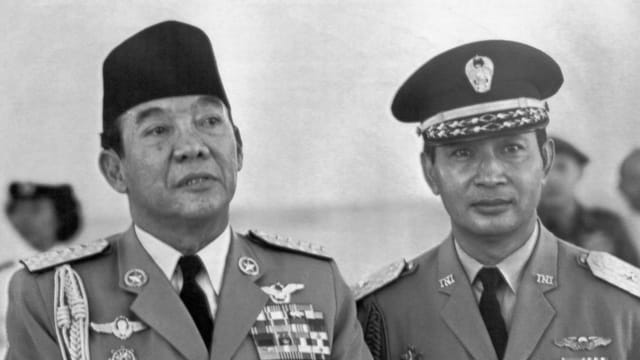
During the 1950s and 1960s, Indonesia experienced significant national change. Under President Sukarno, the country emphasized unity and independence through a period known as Guided Democracy. When an alleged coup attempt took place in 1965 — the event known as G30S/PKI — it became the turning point that ended Sukarno’s era. In the violent aftermath, General Suharto rose to power with military backing, blaming communists for the crisis and launching a nationwide purge that reshaped Indonesia’s politics and society. The new President Suharto, introduced the New Order period.Under this policy of modernization, the government encouraged foreign investment, infrastructure development, and the expansion of tourism across the archipelago. These efforts reached Lombok in the late 1970s and 1980s.
The opening of Lembar Port in the early 1980s improved access between Lombok and Bali, creating new opportunities for trade and tourism. Around the same time, Senggigi began to develop as Lombok’s first major tourist area, supported by hotel construction, road improvements, and promotional efforts linking Lombok to Bali’s growing international market.
By the late 1990s, however, growing corruption, inequality, and the Asian Financial Crisis triggered widespread protests. In 1998, Suharto was forced to resign, ending 32 years of military-dominated rule. Following a period of economic and political transition, Indonesia entered the Reformation era. Power was decentralized, giving provinces and districts greater authority in local governance and development planning.
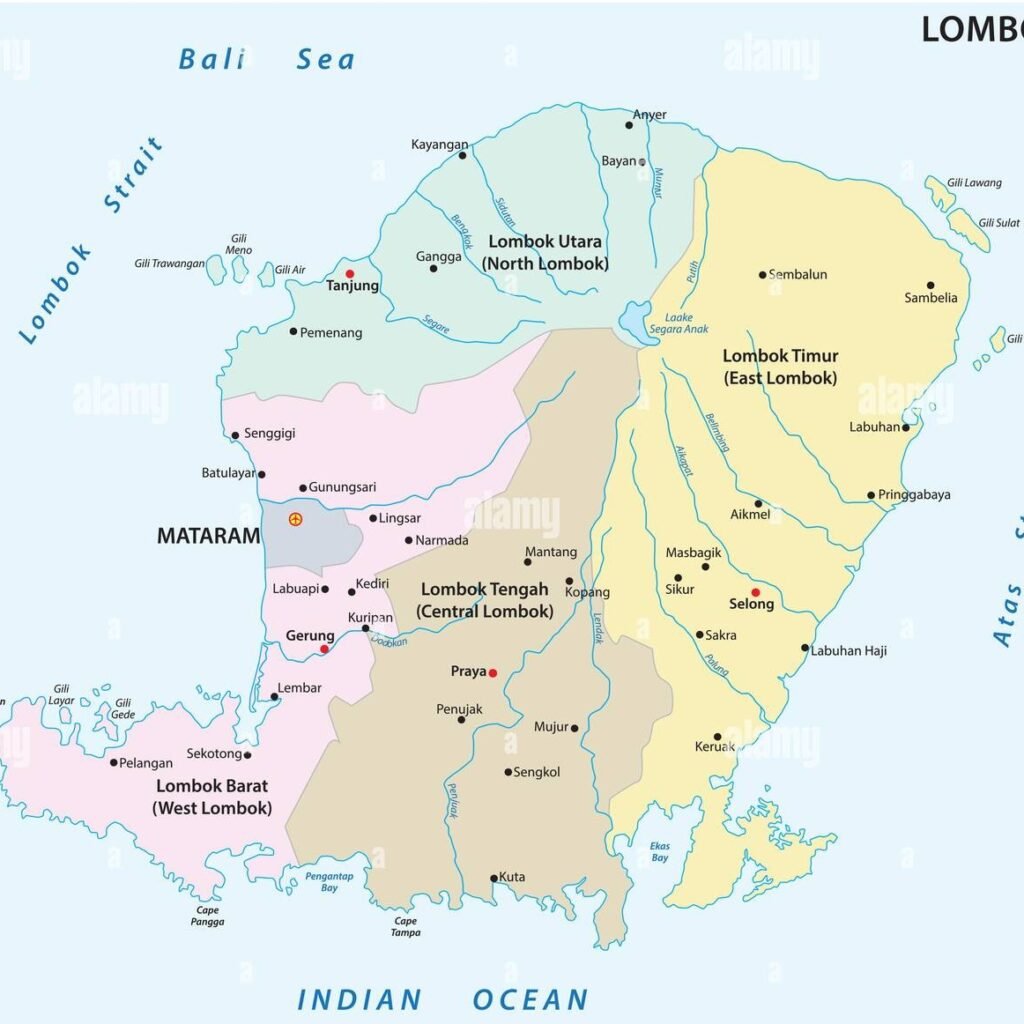
Today, Lombok is part of West Nusa Tenggara Province (NTB) and is divided into five administrative regions:
- Mataram City, the island’s urban and administrative center.
- West Lombok (Lombok Barat), home to Senggigi and Lembar Port.
- North Lombok (Lombok Utara), known for the Gili Islands and Mount Rinjani.
- Central Lombok (Lombok Tengah), home to the new Mandalika tourism area.
- East Lombok (Lombok Timur), rich in agriculture and traditional culture.
Lombok in the 21st Century
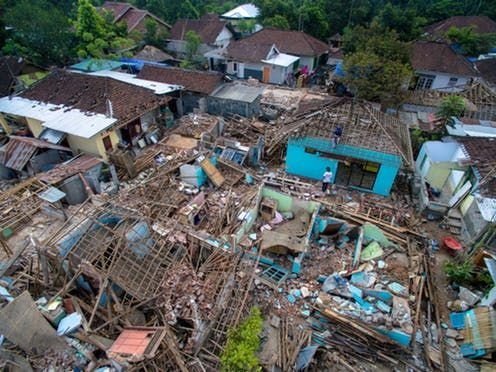
Social unrest in 2000 and the Bali bombings of 2002 caused a steep fall in tourism, halting development projects like Senggigi. Then, in July–August 2018, a series of earthquakes up to magnitude 6.9 struck northern Lombok, killing over 560 people and displacing more than 417,000. Thousands of homes, schools, and mosques were destroyed, and tourism—the island’s main industry—collapsed temporarily.
Just as recovery began, the COVID-19 pandemic hit in 2020. Border closures caused tourist arrivals to drop by over 90%, leading to widespread job losses in hotels, transport, and handicrafts. Many residents returned to farming and fishing to survive. Travel resumed in 2022, and with events like MotoGP Mandalika, tourism began to recover—but the crisis revealed how dependent Lombok’s economy is on tourism and how fragile local livelihoods can be.
Today, poverty remains widespread, varying by region. The minimum wage in 2025 is around IDR 2.8 million/month (≈ USD 170), and average annual incomes range between Rp 16–25 million (≈ USD 1,000–1,500), rising to Rp 48 million (≈ USD 3,000) in Mataram. Despite a labor participation rate above 70% and very low unemployment (around 2–3%), most people work in low-income, informal sectors such as agriculture, construction, and small tourism services. This creates “hidden poverty”, where employment does not guarantee economic security.
Education has improved but also remains uneven—urban schools fare better than rural ones, where students often leave early to support their families. Most of Lombok’s people speak Sasak as their first language, alongside Bahasa Indonesia. Marriage ages remain relatively young, and families average two to three children.
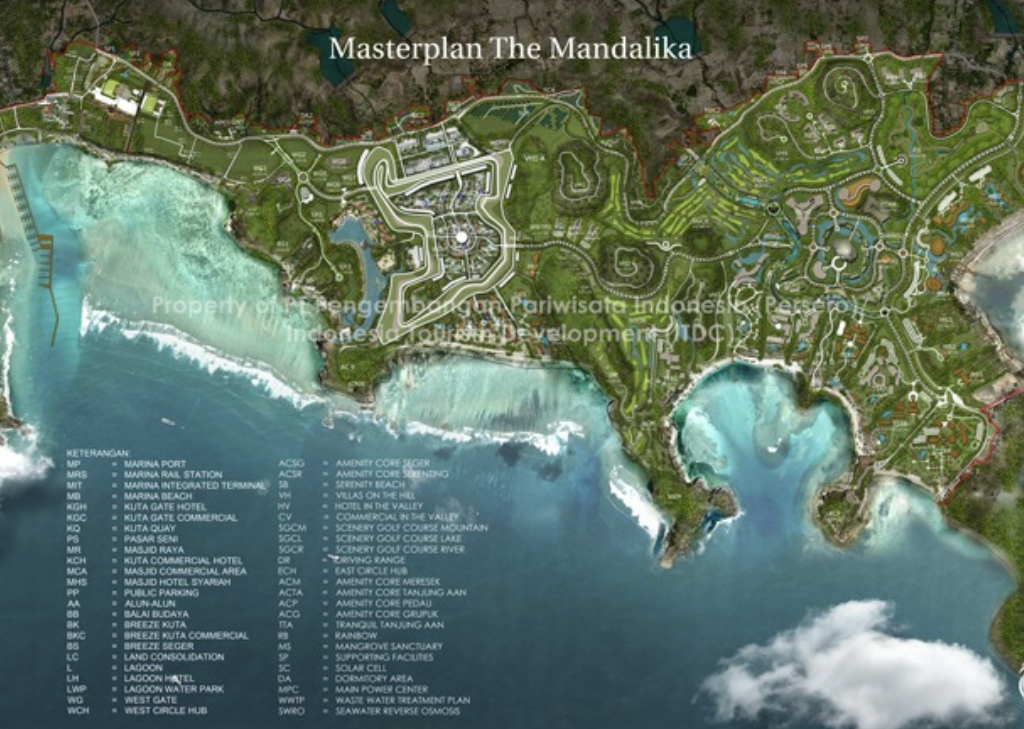
In recent years, Mandalika Special Economic Zone (SEZ) has become a national development prioritym — a 1,175-hectare tourism hub on the south coast managed by ITDC. Established in 2014 under the government’s “10 New Balis” program (launched 2016), it aims to attract investment in resorts, infrastructure, and international events like MotoGP. As of mid-2025, the SEZ recorded IDR 5.7 trillion in investment, approximately USD 350–360 million.
The SEZ has brought jobs, roads, and global attention but also controversy—including land disputes, unequal benefits, and limited local participation. Overall, the Mandalika SEZ represents both Lombok’s economic ambition and its developmental challenges — a vision of modern tourism balanced against the realities of local livelihoods and equitable growth.